


Found a Baby Wild Animal?
What to Do (and NOT Do) Before You Intervene
Every spring and summer, we start getting the same messages: “I found a baby animal—what do I do?” And almost every time, the answer starts the same way:
Pause. Observe. Don’t assume it needs help.
Most baby wildlife found alone are not abandoned. In fact, intervening too quickly is one of the most common, and preventable, mistakes people make.
Step One: Observe Before Acting
Wild parents don’t care for their babies the way humans do. According to the Humane Society of the United States and National Wildlife Rehabilitators Association:
Many species leave their young alone for long periods
Parents often return only a few times a day
Staying away helps avoid attracting predators
That means a baby animal alone is often exactly where it’s supposed to be.
Species-by-Species Guidance
Birds
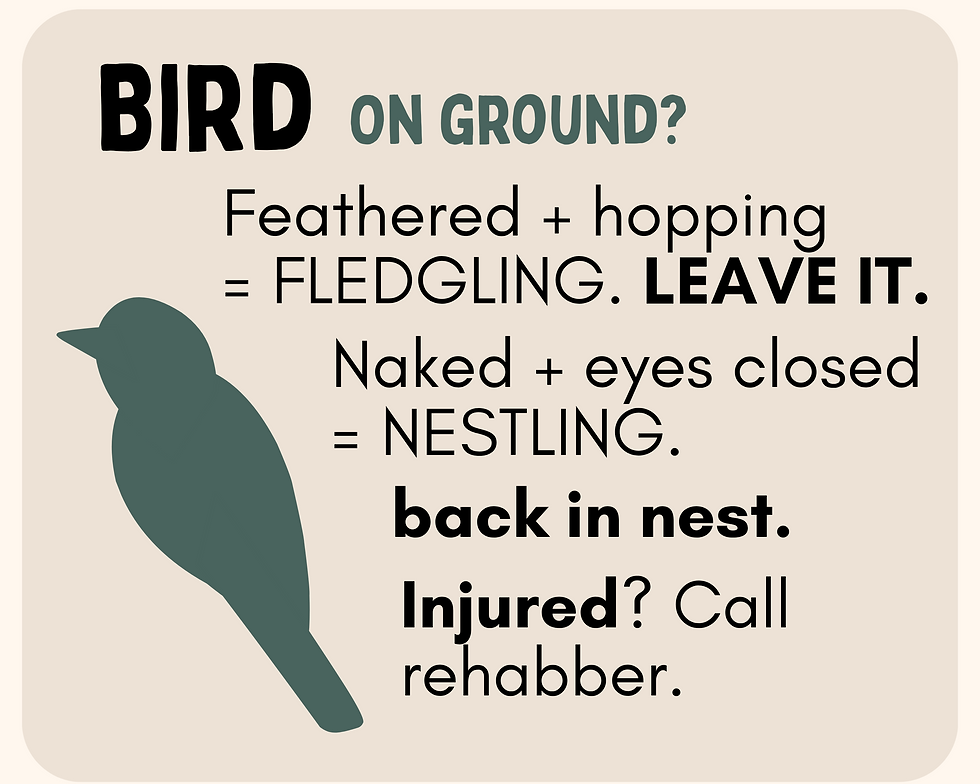
First: identify what you’re seeing
Nestling (no feathers, eyes closed) - Needs to be in the nest
Fledgling (feathered, hopping around) - Learning to fly. This is normal
What to do:
Return nestlings to the nest if possible
Leave fledglings alone and keep pets away
What NOT to do:
Don’t “rescue” a healthy fledgling
Don’t worry about scent, parent birds will still care for them
Squirrels

What to do:
If uninjured, place the baby near the base of the tree it fell from
Observe from a distance. Mom will often retrieve it.
What NOT to do:
Don’t take it inside right away
Don’t assume it’s orphaned
Raccoons
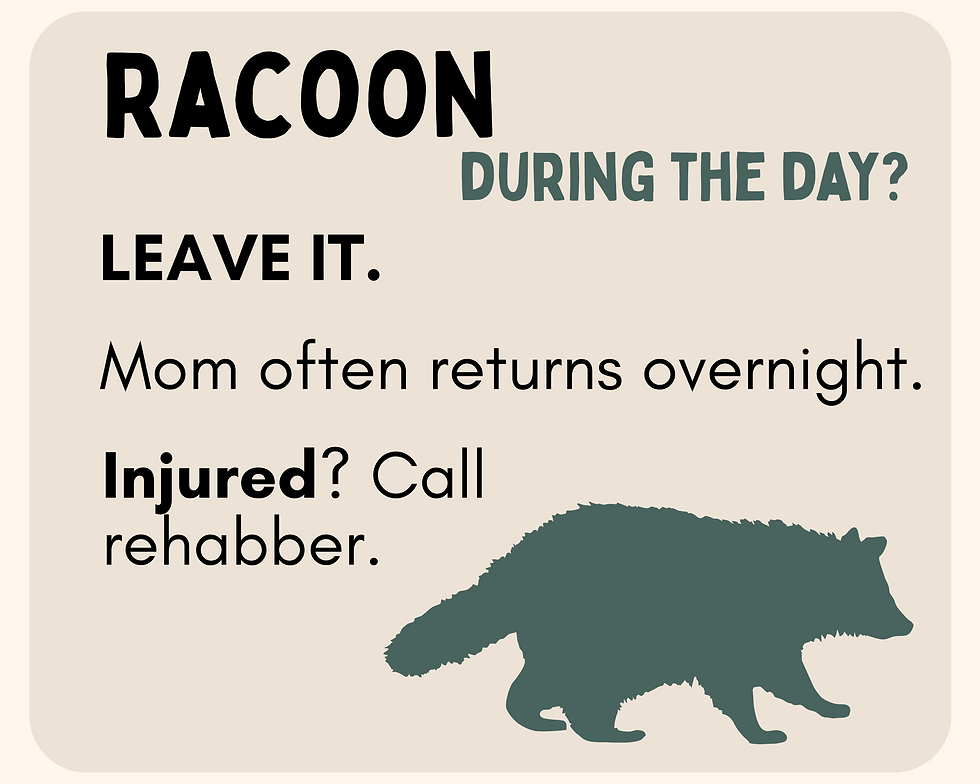
What to do:
Leave them alo
ne and observe, especially overnight
Reunite babies with the nest area if disturbed
What NOT to do:
Don’t handle them (disease risk + stress)
Don’t assume they’ve been abandoned during the day
Opossums
What to do:
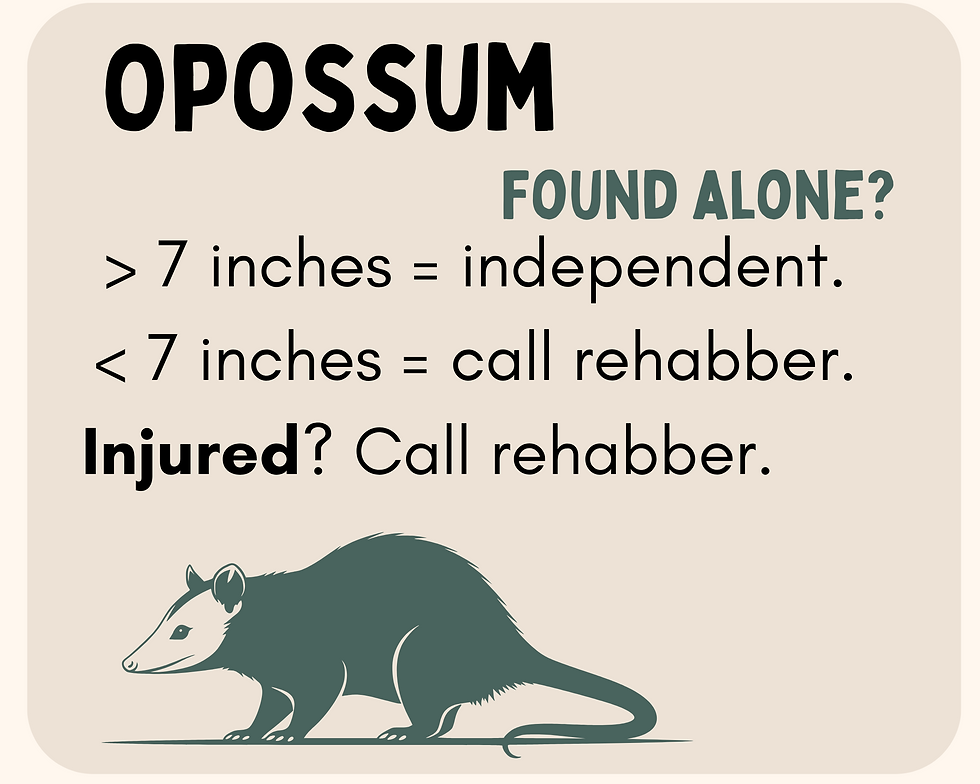
If the baby is very small (under ~7 inches, not including tail) and alone, call a rehabilitator
What NOT to do:
Don’t assume larger juveniles need help, as they often roam independently
Deer (Fawns)
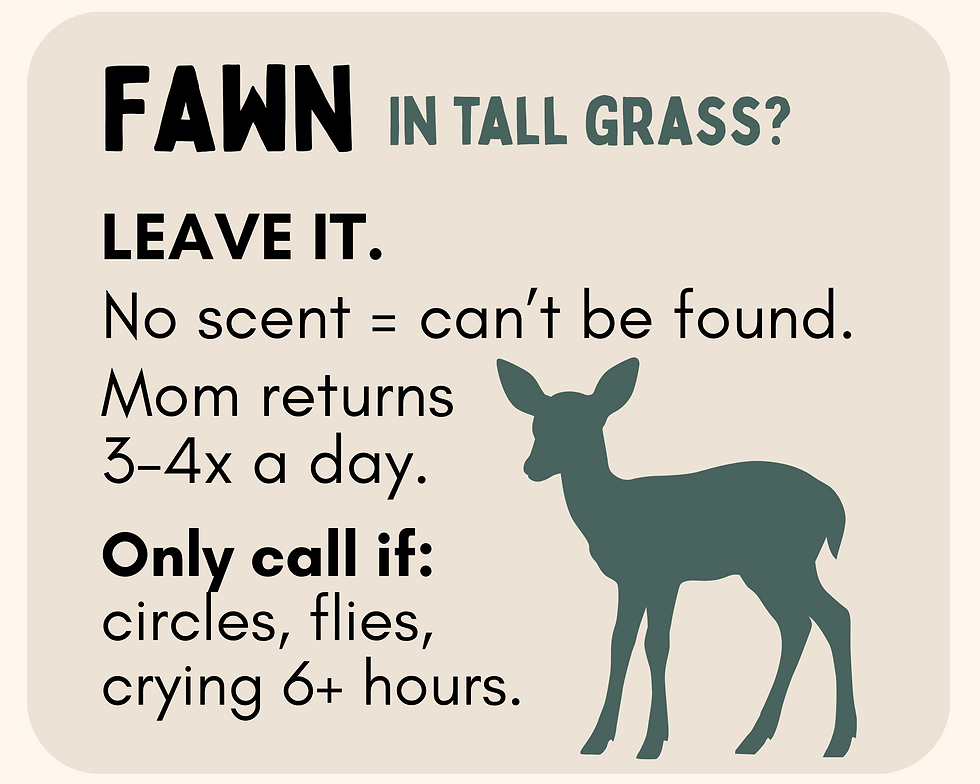
What to do:
Leave the fawn where it is
Keep pets and people away
What NOT to do:
Don’t move it
Don’t assume it’s abandoned
Fawns are often left alone for up to 12 hours while the mother feeds.[¹]
Rabbits

What to do:
Leave them alone if they are quiet and hidden
Observe from a distance
What NOT to do:
Don’t touch or move them
Don’t assume abandonment
Mother rabbits may visit only once or twice a day to avoid attracting predators.[¹]
What NOT to Do (For Any Wildlife)
Don’t Assume It’s Abandoned
Most baby wildlife found alone are not orphaned.[¹]
Don’t Take It Home
Wild animals require specialized diets and care.
Don’t Feed or Give Water
Improper feeding can cause serious injury or death.[²]
Don’t Handle Unnecessarily
Handling causes stress and can reduce chances of reunification.
Don’t Try to Raise Wildlife Yourself
Wildlife rehabilitation requires training, permits, and proper facilities.
When You SHOULD Intervene
Step in ONLY if the animal is:
Injured
Cold or weak
Covered in parasites
Confirmed orphaned (no parent return after extended observation)
In immediate danger
What to Do If Help Is Needed
Place the animal in a secure box
Keep it warm, dark, and quiet
Do not feed
Contact a licensed wildlife rehabilitator immediately
The National Wildlife Rehabilitators Association emphasizes that quick transfer to trained care significantly improves survival.
West Virginia Wildlife Laws (Important!)
If you’re in West Virginia, it’s important to know:
It is illegal to possess or care for wildlife without a permit[³]
Only licensed wildlife rehabilitators can provide care[⁴]
You may transport injured/orphaned wildlife to a rehabilitator or veterinarian without delay[⁵]
In short: You can help, but only to get the animal to the right place.
The Bottom Line
Your instinct to help is a good one. But with wildlife, the best help is often patience and observation, not immediate action. If you care, pause first.
Quick Summary
DO:
Observe first
Keep your distance
Contact professionals if needed
DON’T:
Assume abandonment
Handle or move unnecessarily
Feed or give water
Try to raise wildlife
Sources
[¹] Humane Society of the United States
Guidance on baby wildlife and maternal behavior
[²] National Wildlife Rehabilitators Association
Wildlife care standards and feeding risks
[³] West Virginia Code §20-2-4 – Possession of wildlife
[⁴] West Virginia Code §20-2D-1 & §20-2D-4 – Wildlife rehabilitation permits
[⁵] West Virginia Code §20-2D-3 – Transport to licensed rehabilitator allowed


Comments